

Pausing in Gratitude & Opening with the Generational Perspective on the Natural World
A different approach to introducing environmental economics and externalities in a Principles of Microeconomics Course

Every fall, in my 16-week asynchronous Principles of Microeconomics course, the module on environmental economics, externalities, and public goods falls right around Thanksgiving and during Native American Heritage Month. (In spring, it often aligns with Earth Day.)
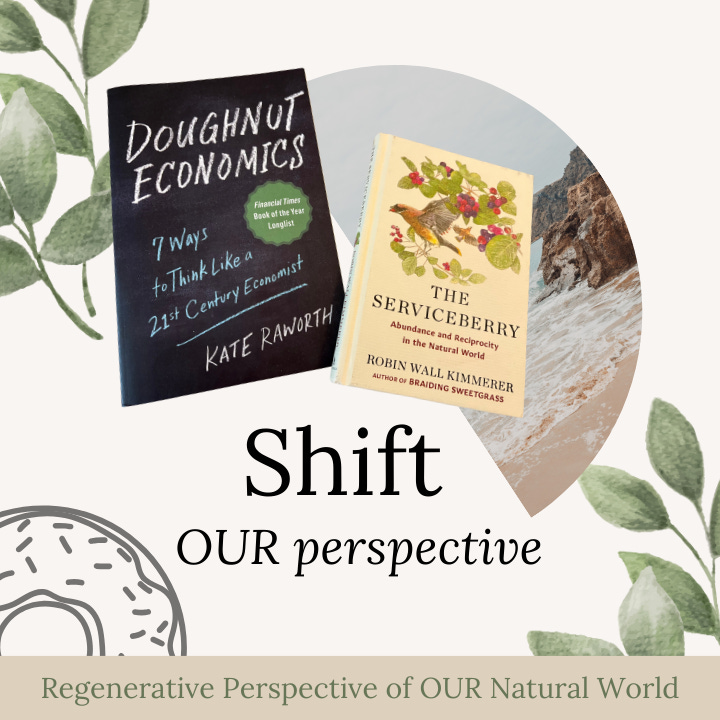
To honor this timing, I start the module with a Gratitude Practice and an invitation to broaden our view of the natural world—shifting from a neoclassical, extractive lens to a more regenerative perspective. We revisit Kate Raworth’s Doughnut Economics and explore ideas from Dr. Robin Wall Kimmerer’s The Serviceberry, along with other resources that highlight our embedded economy and interdependence within nature.
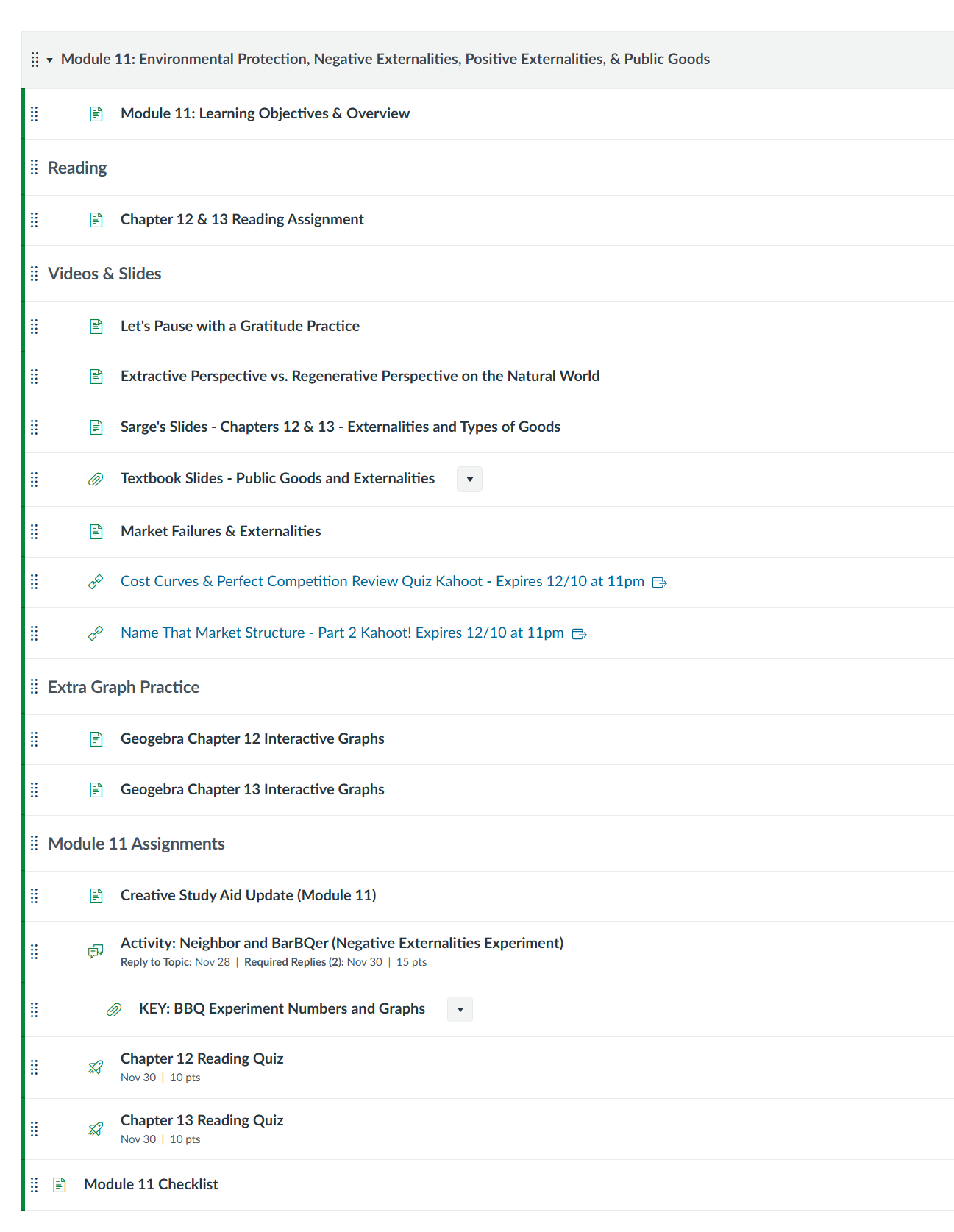
Below, I’m sharing excerpts from the module and a screenshot of how it looks in the course.
~~~
Let’s Pause with a Gratitude Practice
I invite you to Pause in Gratitude for our natural world as we dive into environmental economics and externalities this week.
Set a timer for 1 minute and think about a person, place, or thing in our world and spend the minute holding gratitude for that person/place/thing.
If you would like to share what came up for you, I invite you to post it to our Pause & Practice & Play discussion board. This is completely optional, but available to you if you’d like to share. If you want to share it, but prefer to only share it with me, email it to me. I’d love to see it!
Extractive Perspectives vs. Regenerative Perspectives on the Natural World
Often in a neoclassical approach to our economy, the natural world is seen as a factor of production that can be extracted from to glean scarce natural resources. However, there are newer (and much, much older) perspectives that emphasize a more regenerative and generational perspective of our natural world. I invite you to check out the texts: Doughnut Economics by Kate Raworth and The Serviceberry by Dr. Robin Wall Kimmerer and other resources that widen the perspective, highlighting our embedded economy and our interdependence within our natural world.
Each of you offered doodles and reflections in your Rethink Teams during the “Reimagine the Key Principles of Economics Activity” in the beginning of this course, I am now curious to hear:
What is your perspective on the natural world?
Do you think we need to widen our perspective and approach as we (economists and teachers) teach and share about our economy?
~~~
Before we dive into topics in environmental economics and externalities, watch the following videos of The Honorable Harvest and The Thanksgiving Address before moving on in this module:
The Honorable Harvest - Robin Wall Kimmerer
The Honorable Harvest - Robin Kimmerer
Robin Wall Kimmerer notes in her book, Braiding Sweetgrass,
“You can’t listen to the Thanksgiving Address without feeling wealthy. And, while expressing gratitude seems innocent enough, it is a revolutionary idea. In a consumer society, contentment is a radical proposition. Recognizing abundance rather than scarcity undermines an economy that thrives by creating unmet desires. Gratitude cultivates an ethic of fullness, but the economy needs emptiness. The Thanksgiving Address reminds you that you already have everything you need. Gratitude doesn’t send you out shopping to find satisfaction; it comes as a gift rather than a commodity, subverting the foundation of the whole economy. That’s good medicine for land and people alike.”
Read more about Professor Robin Wall Kimmerer
The Thanksgiving Address - Onondaga Historical Association
Skä•noñh - Great Law of Peace Center - Thanksgiving Address
“This video explores aspects of the Thanksgiving Address and the ways that the Haudenosaunee give thanks to the different elements of the environment. The goal is to share the Haudenosaunee perspective on being thankful, and to have the visitor reflect upon what they are thankful for, as well as to re-examine their own relationship to nature.”
~ Onondaga Historical Association
For more information on the Thanksgiving Address, check out: danceforallpeople
Screenshot of the Module:
If you are an economics educator (or an educator in general), I’d love to hear how you integrate resources that highlight our embedded economy and our interdependence within our natural world into your classes.
Please share below!
I believe, that every small shift of perspective matters.
Knowing that you love the Earth changes you, activates you to defend and protect and celebrate. But when you feel that Earth loves you in return, that relationship transforms from a one-way street to a sacred bond.
~ Robin Wall Kimmerer